Philosophy
- Philosophy (philosophía)
- Speculative (theōrēticós)
- Natural (physiología)
- Doctrinal (mathēmaticós)
- Divine (theología)
- Practical (practicḗ)
- Moral (ēthicḗ)
- Œconomic (œconomía)
- Civil (politicá)
- Speculative (theōrēticós)
- Prædicables (—)
- Genus (génos)
- Species (ī̂dos)
- Difference (diaphorá)
- Property (ídion)
- Accident (symbebicós)
- Anteprædicamenta (—)
- Univocal (synṓnymon)
- Æquivocal (homṓnymos)
- Denomative (parṓnymos)
- Prædicamenta (catēgoríæ)
- Substance (usía)
- Quantity (posón)
- Relation (prós ti)
- Quality (pϗn)
- Time (póte)
- Place (pû)
- Position (cī̂sthæ)
- Habit (échīn)
- Activity (pœeîn)
- Passion (páschīn)
- Causes (ǽtion)
- Matter (hýlē)
- Form (ī̂dos)
- Efficiency (cinûn)
- Perfection (télos)
- Unions (hénōsis)
- Substantial (cat’ usían)
- Hypostatic (cath’ ypóstasin)
- Stationary (catà schésin)
- Welding (catà paráthesin)
- Joining (catà harmonían)
- Mingling (catà crásin)
- Mixture (catà phýrsin)
- Fusion (catà sýnchysin)
- Heaping (catà sōrī́an)
- Coalescence (catà synalœphḗn)
Starting with being in the most generic sense, we may divide it positively into corporeal or negatively into incorporeal. That which is incorporeal then constitutes spirit, & that which is different as corporeal, body. We may then do the same with body into animate & inanimate, where the animate is life, & the inanimate, mineral. Again, with life, into sentient & insentient, which is animal & plant. Further again, animal into rational & irrational, i.e. man & beast.
Having differentiated from the most abstract—i.e. generic—to the most immanent—i.e. specific—we may no longer divide according to species, but enumeration, e.g. Peter, Paul, John &c.
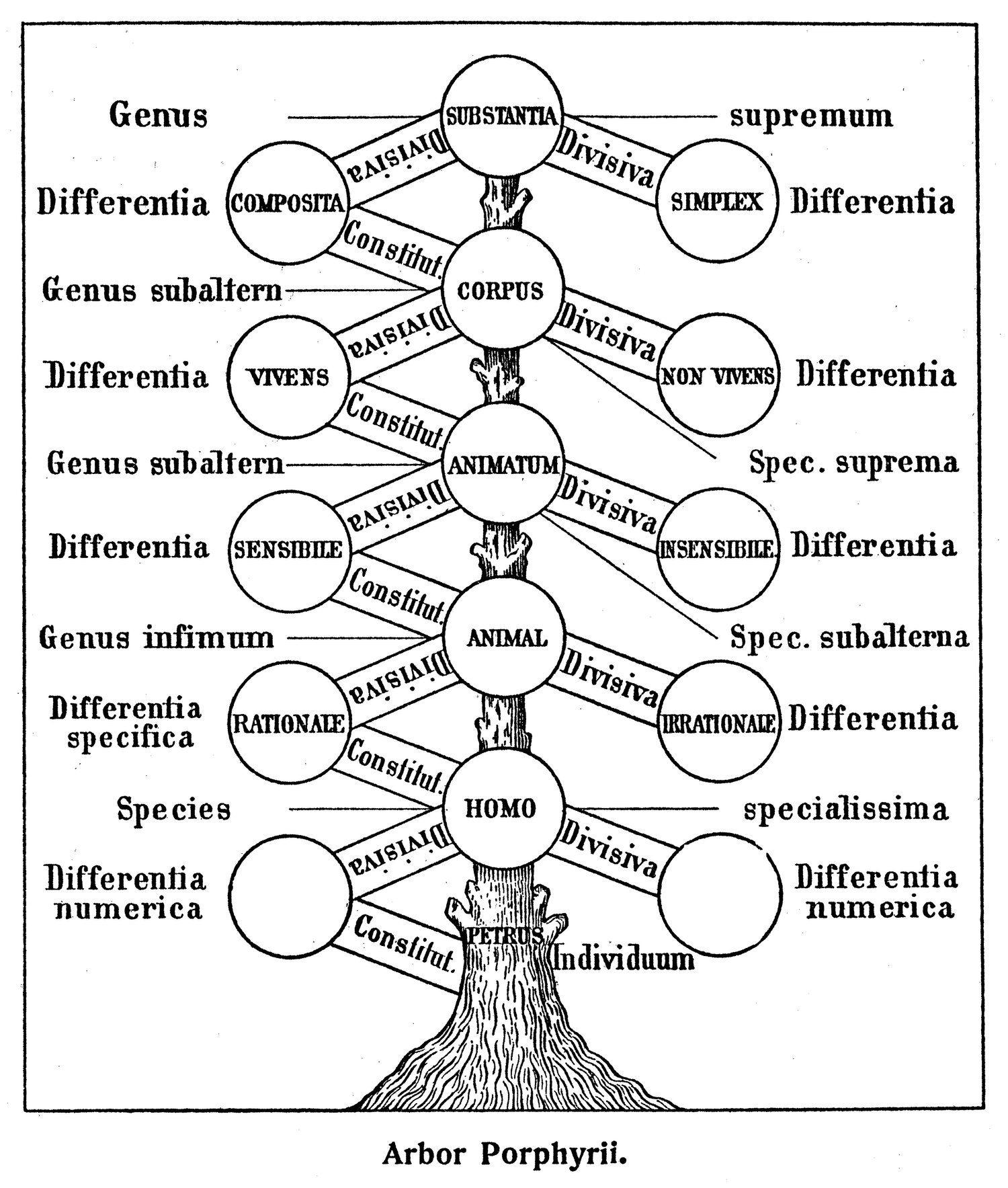
So we have then formed the image of a tree, with the most specific species as the roots, & the supreme genus as the tip.
Subjects
Speculative
| Science | Study of … |
|---|---|
| Natural | Corporeal |
| Doctrinal | Abstract |
| Divine | Spiritual |
Natural philosophy is also called physics. Doctrinal philosophy is also called mathematics.
Geology (study of minerals) & biology (of life)—with its species zoology (of animals) & botany (of plants)—are species of natural philosophy. Metaphysics is the basic principles of all natural philosophy.
Arithmetic, geometry, harmony also called music, & astronomy are the four species of doctrinal philosophy. Further, mechanics & optics are species of geometry.
Practical
| Science | Order of … |
|---|---|
| Moral | Individual |
| Œconomic | Domestic |
| Civil | National |
Prædicamenta
| Prædicament | E.g. |
|---|---|
| Substance | What is it being? |
| Quantity | How much is it? |
| Relation | To what is it? |
| Quality | Like what is it? |
| Time | When is it? |
| Place | Where is it? |
| Position | How is it doing? |
| Habit | How is it being? |
| Activity | What is it doing? |
| Passion | What is done to it? |
- Substance is also called nature & essence. Now nature strictly means a substance with its properties, but it is hardly if ever used this way.
- Activity is also called operation.
Quanta
Discrete
| Quantum | E.g. |
|---|---|
| Number | j., ij., iij., &c. |
| Speech | a, b, c, d, &c. |
Continuous
| Quantum | E.g. |
|---|---|
| Time | Minute, hour, &c. |
| Space | Between surfaces. |
| Line | …of points. |
| Surface | …of lines. |
| Solid | …of surfaces. |
Qualities
| Quality | I.e. |
|---|---|
| Habit | Uneasily changeable activity. |
| Disposition | Easily changeable activity. |
| Potency | Having that power. |
| Impotency | Not having that power. |
| Affection | Lightly acted upon. |
| Passivity | Firmly acted upon. |
| Shape | …of inanimate & animate bodies. |
| Form | …of only animate bodies. |
Causes
| Cause | E.g. |
|---|---|
| Matter | What is it made of? |
| Form | What is it made after? |
| Efficient | What is it made by? |
| Perfect | What it made for? |
In the example of a table:
- The wood is the material cause.
- The carpenter’s plan is the formal cause.
- The carpenter’s tool is the efficient cause.
- The dinner is the perfect cause.
It needs be also said that the ancients used beget & create interchangebly, both meaning to make exist. Only later did they restrict beget to be proper to nature, & create, to operation.
Unions
| Union | E.g |
|---|---|
| Substantial | …of hypostases. |
| Hypostatic | …of soul & body. |
| Stationary | …of judgements by will. |
| Welding | …of brass & lead. |
| Joining | …of stones & wood. |
| Mingling | …of wine & water. |
| Mixture | …of wheatmeal & water. |
| Fusion | …of wax & pitch. |
| Heaping | …of wheat & barley. |
| Coalescence | …of a brand & fire. |
Motions
| Substantial | Quantitative | Qualitative | Place |
|---|---|---|---|
| Generation | Increase | Alteration | Circular |
| Destruction | Decrease | Direct |
Grammar
- Letter (grámma)
- Vowel (phōnḗnta)
- Consonant (sýmphōnon)
- Syllable (syllabḗ)
- Word (léxis)
- Sentence (lógos)
- Class (táxis)
- Noun (ónoma)
- Verb (rhḗma)
- Participle (metochḗ)
- Article (árthron)
- Pronoun (antōnymía)
- Preposition (próthesis)
- Adverb (epírrhēma)
- Conjunction (sýndesmos)
- Gender (génos)
- Masculine (arsenicón)
- Feminine (thēlycón)
- Neutral (udèteron)
- Number (arithmós)
- Singular (enicós)
- Dual (dyïcós)
- Plural (plēthynticós)
- Case (ptō̂sis)
- Nominative (onomasticḗ)
- Genitive (genicḗ)
- Dative (doticḗ)
- Accusative (ætiaticḗ)
- Vocative (clēticḗ)
- Person (prosōpicós)
- First (prō̂tos)
- Second (deúteros)
- Third (trítos)
- Accents (tónos)
- Acute (oxī̂a) –
◌́ - Circumflex (perispōménē) –
◌̂ - Grave (barī̂a) –
◌̀ - Rough Breath (dasỳ pneûma) –
◌῾ - Smooth Breath (psīlòn pneûma) –
◌᾿ - Trema (diǽresis) –
◌̈
- Acute (oxī̂a) –
- Punctuation (stigmḗ)
- Period (telī́a)
- Semicolon (ánō telī́a)
- Comma (hypodiastolḗ)
Consonants
Semivowels
| Double | Unchangeable |
|---|---|
| z | l |
| x | m |
| – | n |
| r | |
| s |
The letters m & n are commonly called nasal.
Mutes
| Smooth | Medial | Rough |
|---|---|---|
| b p | v | f |
| c k q | g | h |
| d t | – | – |
The letters b, p, v, & f are commonly called labial, c, k, q, g, & h, velar, but d & t (including ð & þ), dental.
Vowels
| Long | Short | Doubtful | Diphthong |
|---|---|---|---|
| – | e | a | æ |
| – | o | i | au |
| u y | ei | ||
| eu | |||
| œ | |||
| ou |
Classes
| Class | E.g |
|---|---|
| Common Noun | man, horse |
| Proper Noun | Peter, Paul |
| Verb | strike |
| Participle | trusting |
| Article | the |
| Pronoun | he |
| Preposition | in, at, from |
| Adverb | here, wastely |
| Conjunction | and, but, or, so |
Pronouns
| Gender | Number | Person | Nominative | Genitive | Dative | Accusative |
|---|---|---|---|---|---|---|
| ——— | Sn. | j. | I | my, mine | to me | me |
| ——— | ij. | thou | thy, thine | to thee | thee | |
| Masc. | iij. | he | his | to him | him | |
| Fem. | she | hers | to her | her | ||
| Neut. | it, that | its | to it | it | ||
| ——— | Pl. | j. | we | our | to us | us |
| ——— | ij. | you | your | to ye | ye | |
| ——— | iij. | those, they | their | to them | them | |
| ——— | which, who | whose | to whom | whom |
Cases
| Case | E.g. |
|---|---|
| Nominative | he is working |
| Generic | his hands |
| Dative | speaking to him |
| Accusative | hearing him |
| Vocative | then, Peter |
Although all of these are examples of the third person male singular pronoun, the last needs must, for English, be a proper noun.
The vocative was assumed into the nominative & accusitive.
Punctuation
| Latin | Greek | Meaning |
|---|---|---|
| . | . | Pause. |
| ; | · | Pause or breath. |
| : | : | Pause or breath. |
| , | ⸒ | Breath. |
| ' | ’ | Abbreviate letter. |
| - | ‿ | Read as single word. |
| ? | ; | Read as question. |
| ! | ! | Read with excitement. |
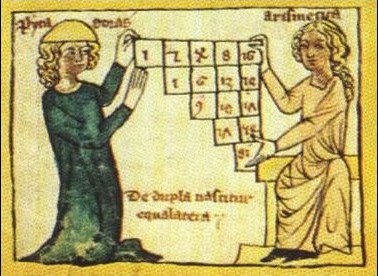
Arithmetic
- Number (arithmós)
- One (hén)
- Two (dýo)
- Three (tría)
- Four (téssara)
- Five (pénte)
- Six (héx)
- Seven (heptá)
- Eight (octṓ)
- Nine (ennéa)
- Ten (déca)
- Twenty (ī́cosi)
The numbers twelve & twenty are also called a dozen & a score, e.g. twenty-four is two-dozen, & sixty is three-score.
Finger-Counting
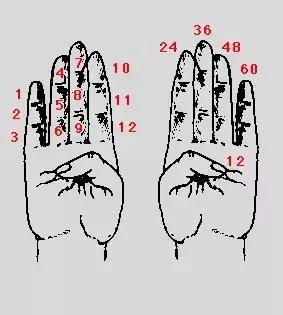
The ancients counted in sexagesimal, meaning around sixty. Place the thumb against the first part of the farthest finger to count one, then move the thumb down to the second part for two, & the third part for three. Do this for each finger from left to right to count to twelve. Then fold a finger on the other hand for each twelve, so when all are folded, sixty is counted.
Education
Arts
- Lower Arts (catṓteres téchnes)
- “Trivium”
- Grammar (grammaticḗ)
- Dialectic (dialecticḗ)
- Rhetoric (rhētoricḗ)
- “Quadrivium”
- Arithmetic (arithmēticḗ)
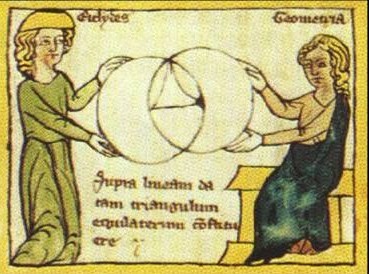
- Geometry (geōmetría)
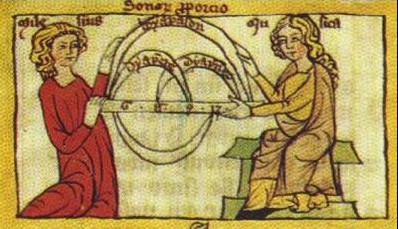
- Harmony (harmonía)
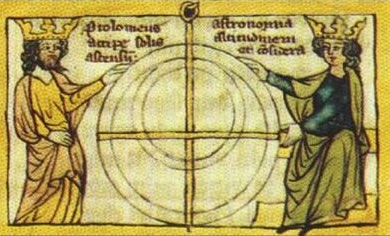
- Astronomy (astronomía)
- “Trivium”
- Higher Arts (anṓteres téchnes)
- Medicine (giatricḗ)
- Jurisprudence (nomicḗ)
- Theology (theología)
The lower arts were also called the liberal arts, because every free citizen was expected to know them, or at least the trivium.
Rhetoric
| Canon | E.g. |
|---|---|
| Invention | Discovering an argument. |
| Disposition | Arranging an argument. |
| Elocution | Presenting an argument. |
| Memory | Remembering an argument. |
| Pronunciation | Delivering an argument. |
Pronunciation is sometimes called action.
University
The university—like modern law & most civil institutions—originates from Constantinople, where it was called the pandidacterium.
It had chairs for:
- Law
- Philosophy
- Medicine
- Arithmetic
- Geometry
- Astronomy
- Music
- Rhetoric
It was established in opposition to & supplanting of the gentile academy. Private tutors were previously & still after widely used.
References
Philosophy
- John of Damascus, St. “Philosophical Chapters” in: The Fount of Knowledge.
- John of Damascus, St. “An Exact Exposition of the Orthodox Faith” in: The Fount of Knowledge.
- Porphyry. Isagoge.
- Aristotle. Categories.
- Aristotle. Metaphysics.
Grammar
- Thrax, Dionysius. The Art of Grammar.